Navigating Change—The Imperative for Evolving Business Systems
Change isn’t just constant; it’s the only constant. Businesses, especially ambitious MSMEs, face a whirlwind of rapid growth, evolving customer demands, new regulations, and sudden market shifts. In such an environment, the technology powering your operations cannot afford to be rigid. Traditional, monolithic business systems, while robust in their time, can quickly become burdensome, stifling innovation and making adaptation feel like an uphill battle.
The answer to this challenge lies in flexibility and adaptability: the modular ERP system. Unlike single, all-encompassing software beasts, a modular ERP offers a sophisticated yet nimble approach to managing your business. It’s designed specifically for dynamic environments, allowing you to build and evolve your digital infrastructure in lockstep with your business needs. This guide will explore the key benefits that make modular ERP the ideal choice for any business that’s constantly evolving.
Understanding Modular ERP System
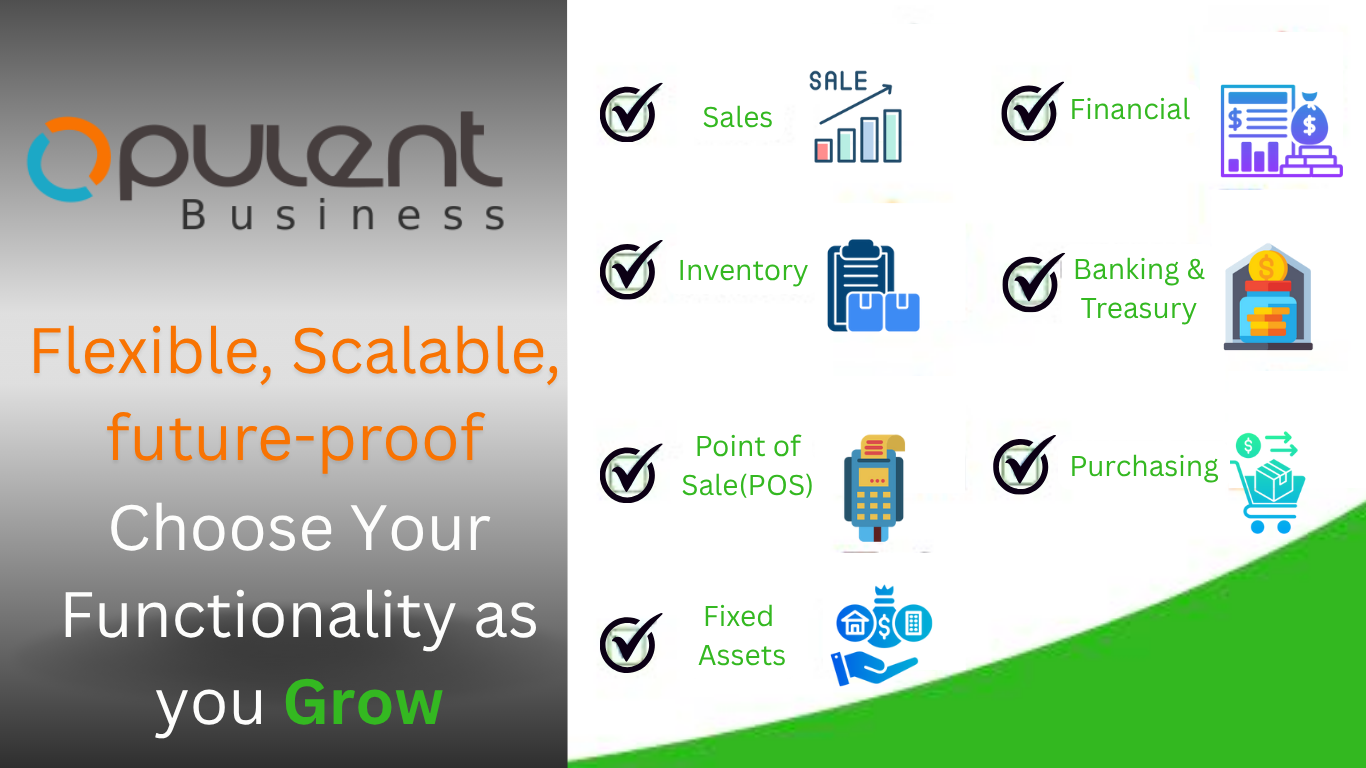
Before diving into the benefits, let’s clarify what a modular ERP system actually is. At its core, a modular ERP is a business management software solution built from distinct, independent components, or “modules.” Each module handles a specific business function, such as :
- Accounting & Finance
- Inventory Management
- Customer Relationship Management (CRM)
- Human Resources (HR)
- Point of Sale (POS)
- Manufacturing
- Supply Chain Management
- Project Management
The power of modularity lies in your ability to select and combine only the modules you need. Instead of being forced to buy a massive, complex system with features you may never use, you assemble a customized suite that perfectly matches your current operations. This contrasts sharply with a monolithic ERP, which is typically a single, integrated block of software that is harder to customize or scale incrementally.
Key Benefits of Modular ERP for Evolving Businesses
For businesses navigating constant change, a modular ERP system offers distinct advantages:
1. Unmatched Scalability & Flexibility
The most compelling benefit of a modular ERP system is its inherent scalability. Businesses can start lean, implementing only the essential modules like accounting and basic sales. As the business grows, diversifies, or expands into new markets, additional modules can be seamlessly added—perhaps inventory management, then a full CRM, or a manufacturing suite. This eliminates the need for massive upfront investments or disruptive system overhauls, allowing your technology to grow organically with your company.
2. Cost-Effectiveness & Budget Control
Why pay for what you don’t use? With a modular ERP, you invest only in the functionalities you currently need. This pay-as-you-grow model optimizes your spending, frees up capital, and allows for more precise budget allocation. By investing incrementally, you ensure every dollar spent on your ERP directly contributes to an immediate business need, leading to a much better return on investment.
3. Phased Implementation & Faster Time-to-Value
Implementing a large-scale ERP can be daunting. Modular systems alleviate this by allowing for phased deployment. You can roll out critical modules (e.g., core accounting, sales order processing) first, achieving immediate benefits and familiarizing your team with the system. Subsequent modules can be introduced gradually, minimizing disruption to daily operations and accelerating your time-to-value for each new functionality. This smoother transition fosters greater user acceptance.
4. Reduced Risk & Enhanced Business Continuity
A problem in one part of a monolithic system can potentially cripple the entire operation. With a modular ERP, issues within a specific module are often isolated, preventing cascading failures across the entire system. Similarly, updates, customizations, or troubleshooting can be performed on individual modules without necessarily impacting others. This localized approach means minimized downtime, more precise maintenance, and greater system stability, ensuring your business continues to run smoothly even during technical adjustments.
5. Easier User Adoption & Training
The prospect of learning an entirely new, complex software system can be overwhelming for employees. Modular ERP simplifies this by breaking down the learning curve. Users are introduced to functionalities module by module, absorbing new information in manageable chunks. This phased learning leads to smoother user adoption, reduced resistance to change, and higher proficiency levels across your team, as they become experts in the specific modules relevant to their roles.
6. Tailored Customization Without Over-Complexity
Every business has unique workflows. Modular ERP systems allow for highly personalized solutions because customizations can often be contained within specific modules. This means when a core module is updated or another module is added, the customizations in other parts of the system are less likely to break or cause compatibility issues. You get a system precisely tailored to your needs without creating a fragile, unmanageable Franken ERP.
7. Agility & Future-Proofing
Modular ERPs offer unparalleled agility because you can easily integrate new technologies (like AI, IoT, or advanced analytics tools) or swap out outdated modules without disrupting the entire ecosystem. This ability to adapt quickly to new market trends, technological advancements, or changing regulatory landscapes ensures your business remains competitive and future-proof.
8. Focused Upgrades & Maintenance
With a monolithic system, applying an update often means taking the entire system offline for an extended period. For modular ERPs, updates, patches, and routine maintenance can frequently be applied to individual modules as needed. This leads to more efficient IT management, significantly less disruption to users, and a more streamlined process for keeping your system current, secure, and running at peak performance.
Real-World Impact: How Modularity Translates to Growth
Consider a few scenarios where modularity shines:
- A Startup Scaling Up: A fledgling e-commerce business might start with just accounting and POS modules. As they grow and begin manufacturing their own products, they can seamlessly integrate manufacturing and inventory management modules without having to reinvest in an entirely new system.
- An Established Business Diversifying: A retail chain decides to launch a new restaurant arm. Instead of running a completely separate system for the restaurant, they can simply add a specialized restaurant POS and inventory module to their existing ERP, integrating new operations with their core financials.
- Adapting to Regulatory Changes: When new tax regulations are introduced, only the financial or compliance modules need to be updated, minimizing disruption to sales, inventory, or HR departments.
Choosing a Modular ERP: Key Considerations for Your Evolving Business
While the benefits are clear, choosing the right modular ERP requires careful thought:
- Integration Capabilities: Ensure that the modules can genuinely “talk” to each other seamlessly. The power of ERP lies in integration.
- Vendor Ecosystem: Look for a vendor with a strong track record, a clear roadmap for future modules, and robust support.
- Scalability of Core: The underlying platform must be able to handle not just more modules, but also more data, more users, and more complex transactions as you grow.
- User-Friendliness: No matter how powerful, if the system isn’t intuitive, adoption will suffer.
Building Today for Tomorrow
In a world defined by constant change, the rigidity of traditional business systems is no longer viable. A modular ERP system provides the agility, flexibility, and cost-effectiveness that today’s evolving businesses need to not just survive, but thrive. It allows you to build a robust digital foundation that can grow with you, adapt to new challenges, and seize emerging opportunities without disruption.
By strategically investing in a modular ERP, you’re not just buying software; you’re investing in a future-proof solution that empowers your business to remain agile, efficient, and profitable for years to come.
Explore how a modular ERP solution can transform your operations and unlock new levels of efficiency. Contact us today for a personalized consultation or schedule a free demo to see our flexible solutions in action!